
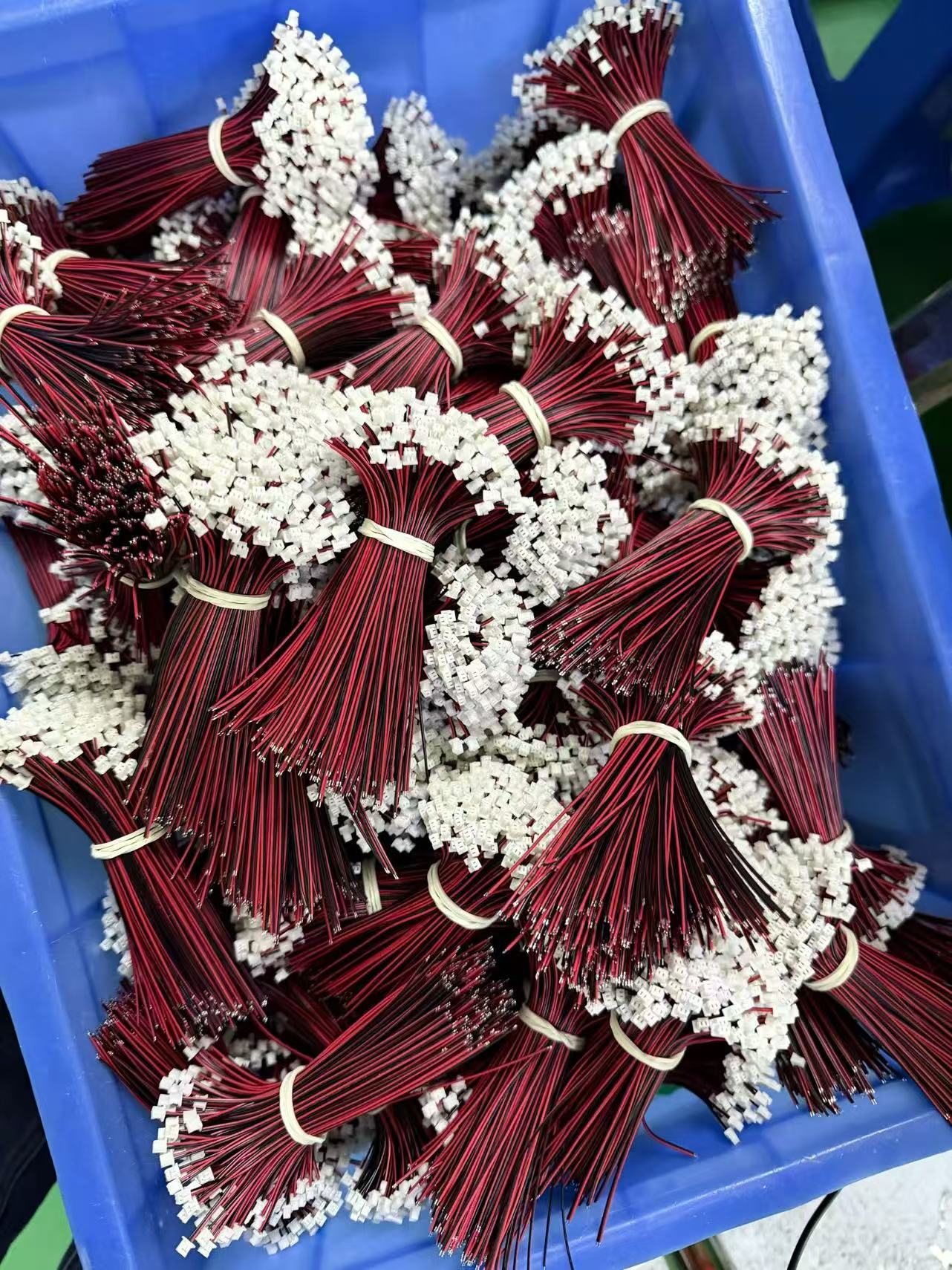
Terminal wire processing is a precise manufacturing process that turns raw wires and terminals into pre-terminated connecting components, essential for reliable electrical transmission in automotive, consumer electronics, and industrial fields. It involves standardized, interconnected steps with strict quality control to meet performance and safety standards. This guide outlines the core workflow, key materials, and critical considerations for efficient processing. 1. Key Materials Quality terminal wires depend on suitable raw materials: Conductive wires (mostly copper, tinned copper for corrosion resistance) come in various gauges, with lower numbers indicating thicker wires for higher currents. Terminal connectors, made of copper or brass (often tin/gold-plated), match wire gauges and connection needs (ring, spade, pin types). Insulation materials (PVC for general use, silicone for high temperatures) protect conductors from short circuits and damage. 2. Core Processing Steps The workflow is sequential, focusing on precision and consistency, especially for high-volume production: 2.1 Material Preparation & Wire Processing Raw materials are inspected for defects. Wires (supplied in spools) are cut to specified lengths by automated machines (±0.1mm accuracy) and stripped to expose conductors—insufficient stripping ruins connections, while over-stripping risks damage. Multi-core wires need two-step stripping (outer insulation first, then individual conductors). 2.2 Terminal Connection Crimping is the primary method: machines compress terminals around conductors, forming a secure mechanical and electrical bond (conductor crimp for contact, insulation crimp for strain relief). Calibrated force is critical—too little causes loose connections, too much damages components. Soldering (for high-conductivity needs like medical devices) uses heat and solder, but is slower and vibration-sensitive. 2.3 Optional Insulation & Testing Harsh-environment applications add insulation (heat-shrink tubing is cost-effective). Testing is vital: continuity tests check conductivity, pull tests verify crimp strength, insulation resistance tests detect defects, and visual inspections catch uneven crimps or damaged insulation. Defective products are rejected. 2.4 Packaging Final products are packaged (bags, boxes, spools) with labels indicating specifications, protecting them during shipping and storage. 3. Quality Control & Challenges Quality control includes material inspection, equipment calibration, in-process testing, standard compliance (IPC/WHMA-A-620), and traceability. Key challenges: miniaturization demands precision for thin-gauge wires, high-volume production requires robust automation, and harsh environments need specialized materials. Conclusion Terminal wire processing combines precision steps, quality materials, and strict control to produce reliable components. Automation and specialized materials address industry challenges, ensuring these components remain the backbone of modern electrical systems.
- ~에 의해 HuamaoWire
Terminal Wire Processing: Key Steps and Quality Control
- ~에 의해 HuamaoWire
Share:
TE 281838-4:The Reliable Interconnect Solution for Industrial Automation
5 Costly Mistakes to Avoid When Selecting Terminal Wire Harnesses + Performance Boosting Strategies