
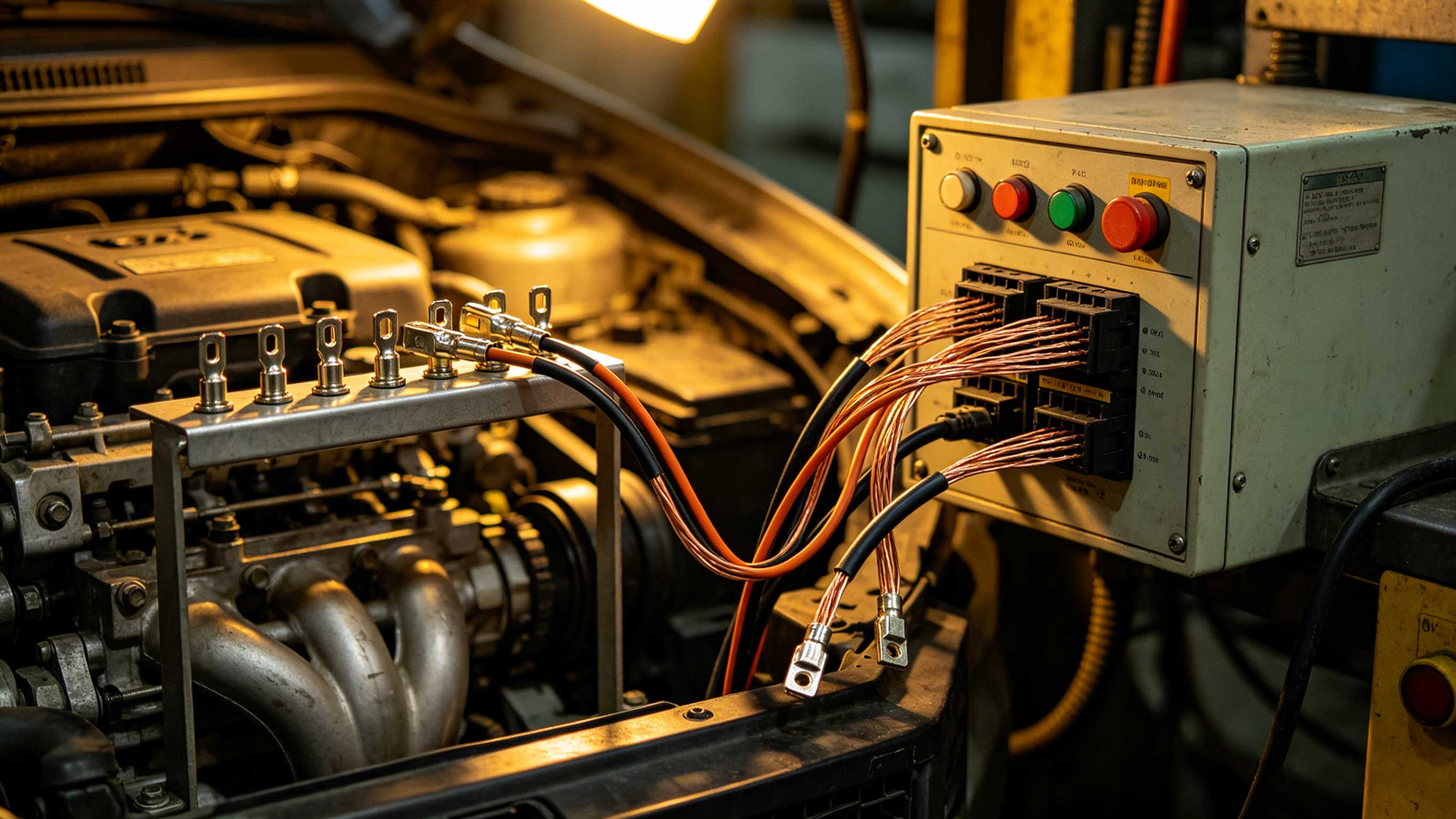
In the complex web of electrical systems—from household appliances to industrial machinery—one component quietly ensures seamless power flow and signal accuracy: terminated wires. These specialized wire harnesses feature pre-crimped or soldered terminals that create secure, long-lasting connections, eliminating the risks of loose joints, signal interference, or electrical failures. Unlike generic wires that require time-consuming on-site termination, pre-terminated solutions offer plug-and-play convenience without compromising performance. Let’s dive into what makes terminated wires indispensable, their key types, and how to choose the right one for your project.
What Are Terminated Wires?
At their core, terminated wires consist of three critical components:
- Conductor Core: Typically made of high-purity copper (T2 grade, ≥99.90% copper content) or tinned copper for corrosion resistance, ensuring minimal electrical resistance .
- Insulation Layer: PVC, silicone, or XLPE materials that protect against short circuits, moisture, and temperature extremes (ranging from -40°C to 150°C for industrial-grade options) .
- Termination Connector: Crimped, soldered, or plugged terminals (e.g., DT copper terminals, DTL copper-aluminum transition terminals) designed to match specific device interfaces .
The magic lies in the termination process: precision crimping using hydraulic tools (per GB/T 14315-2008 standards) creates a mechanical bond that withstands vibration, pulling, and thermal expansion—far more reliable than manual twisting or soldering .
Key Advantages of Pre-Terminated Wires
Why choose terminated wires over raw cables? Here are the game-changing benefits:
- Rapid Installation: Plug-and-play design cuts setup time by 50% or more—no specialized tools or technical expertise required .
- Consistent Reliability: Factory-controlled termination ensures uniform crimp force and joint quality, reducing failure rates by up to 80% compared to on-site connections .
- Enhanced Safety: Insulated terminals prevent short circuits and electrical shocks, while corrosion-resistant coatings (tin or gold plating) extend service life in harsh environments .
- Flexibility: Customizable lengths, conductor gauges (22-24 AWG for electronics, 120-300 mm² for industrial power), and connector types (Molex, JST, TE Connectivity) adapt to diverse applications .
Common Types of Terminated Wires & Their Uses
Terminated wires are engineered for specific scenarios—here are the most widely used variants:
|
Type
|
Key Feature
|
Ideal Applications
|
|
Crimped Terminated Wires
|
Mechanical bond via precision crimping
|
Automotive wiring, industrial automation (PLCs, sensors)
|
|
Soldered Terminated Wires
|
Permanent, low-resistance connection
|
Medical devices, aerospace electronics
|
|
Shielded Terminated Wires
|
Metal braid/aluminum foil for EMI protection
|
Telecommunications, precision instrument
|
|
Copper-Aluminum Transition (DTL)
|
Prevents electrochemical corrosion
|
High-voltage power distribution (10kV systems)
|
How to Select the Right Terminated Wire for Your Project
- Match the Conductor to Current Requirements: Choose copper cores for low-resistance power transmission or tinned copper for marine/ humid environments .
- Consider Environmental Conditions: Silicone insulation for high temperatures (-40°C to 150°C) or PVC for cost-effective, general-purpose use .
- Verify Terminal Compatibility: Ensure the terminal type (spade, pin, bullet) matches your device’s interface—refer to ANSI/EIA 359-A-84 color-coding standards for consistency .
-
Check Safety Certifications: Look for compliance with GB/T 14315-2008 (China) or ASTM B33-91 (US) to guarantee performance under load .
Real-World Applications: Where Terminated Wires Shine- Automotive: New energy vehicles (EV) battery packs, dashboard wiring, and sensor connections rely on vibration-resistant crimped terminated wires .
- Industrial Automation: Production lines use shielded terminated wires to transmit signals between PLCs and actuators without electromagnetic interference .
- Medical Devices: Heart monitors and ventilators require soldered terminated wires for 24/7 reliability and biocompatibility .
- Smart Homes: IoT devices (smart locks, cameras) use miniaturized terminated wires for space-saving, plug-and-play installation .
Share:
5 Costly Mistakes to Avoid When Selecting Terminal Wire Harnesses + Performance Boosting Strategies
63030 Terminal Wire: The Unsung Hero of Reliable Wiring Harness Connections